 MoneyStatsReport Editors
In this article
- What Actually Happened to Your Old Loan
- How Much Debt Buyers Are Rolling Forward Now
- What $7,000 of Old Debt Costs on a New Loan
- Where the Old Balance Shows Up in Your Contract
- When a Payoff Promise Becomes a Legal Problem
- Who Ends Up Carrying the Most Rolled Debt
- What to Do if You Already Signed
- Frequently Asked Questions
- 1. Is Interest on Negative Equity Tax Deductible?
- 2. Can I Return the Car After Spotting the Rolled Debt?
- 3. Does the Same Thing Happen With a Leased Car?
- 4. Is There a Limit on How Much Negative Equity a Lender Will Finance?
- 5. Should I Keep Paying the Old Loan Until the Payoff Posts?
- The Number Worth Finding This Week
You traded in your car, and the dealer promised to pay off the old loan. It did, and your former lender got its check. Nobody mentions where that money came from.
If you owed more than the car was worth, the shortfall is called negative equity, and it usually did not vanish. It moved into your new loan, where it collects interest at the new rate.
Nearly 3 in 10 trade-ins toward new cars were underwater in the third quarter of 2026. Below, we show how to find negative equity in your contract and what to do next.
What Actually Happened to Your Old Loan

When a dealer pays off a trade-in, it sends your old lender the full payoff amount. That part is real. What matters is who covers the gap between that payoff and your trade-in credit.
The Federal Trade Commission explains negative equity with a simple example. A car worth $15,000 with an $18,000 balance leaves $3,000 of negative equity.
Any dealer that “pays” it may add it to your new loan, take it from your down payment, or both.
Negative equity means the payoff on your current car loan is higher than the value of the car. Your payoff can differ from your statement balance because of accrued interest and fees.
The dealer did pay off your old car, using your money routed through a bigger loan. Generous is not quite the word.
How Much Debt Buyers Are Rolling Forward Now
Edmunds data on financed trade-ins toward new vehicles, summarized by CBT News on October 22, shows the underwater share easing slightly in 2026 while the debt kept growing.
| Measure | Q3 2026 | Comparison |
| Trade-ins with negative equity | 29.1% | 28.1% in Q3 2025 |
| Average negative equity | $7,107 | $5,000 to $5,500 in 2016 to 2019 |
| Rollover amount financed | $57,235 | $39,732 in Q3 2019 |
| Rollover monthly payment | $952 | $646 in Q3 2019 |
| Estimated lifetime interest | $16,610 | $9,093 in Q3 2019 |
Rollover buyers paid an average APR of 8.1%, and 91.2% signed for 72 months or longer. Long terms make the payment fit but keep the next car underwater longer, as our report on the record share of 84-month car loans explains. The small dip since January is a pause, not a recovery.
What $7,000 of Old Debt Costs on a New Loan
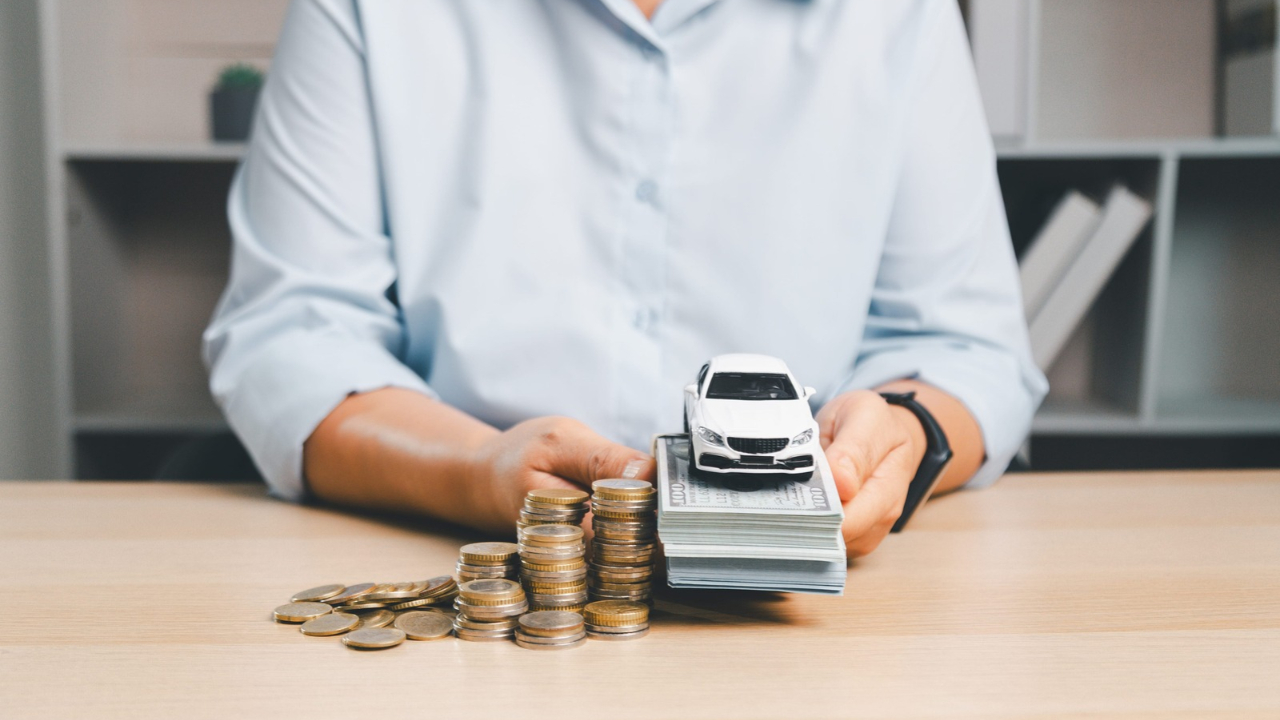
To make the averages concrete, we ran a hypothetical illustration. Say your new car needs a $44,000 loan, near the third-quarter average, and you owe $7,000 more on your trade-in than it is worth.
The dealer finances $51,000 at 8.1% APR for 72 months. Our math excludes taxes, fees, and insurance.
- The payment rises from about $774 to about $897 a month.
- Total interest climbs from about $11,700 to about $13,561, so the old $7,000 costs about $8,860 to clear.
- If $44,000 matches the value of the car, you start $7,000 underwater before any depreciation.
Stretch it to 84 months and the payment falls to about $797, while interest on the old debt alone grows to about $2,194. Cheaper monthly, pricier overall. Car loans never tire of that trick.
Where the Old Balance Shows Up in Your Contract
Financing negative equity is not illegal on its own. Hiding or misrepresenting it is the problem. Under Regulation Z, section 1026.18, the creditor must itemize the amount financed, including amounts paid to others for you, or tell you that you may request that itemization in writing. Then read your contract in this order.
- Find the trade-in allowance, the credit the dealer gave for your old car.
- Locate the payoff sent to your old lender, often labeled as a prior credit or lease balance.
- Subtract the allowance from the payoff. A positive number is the negative equity you financed.
- Check the down payment line. If it looks smaller than the cash you handed over, part of it may have covered old debt.
Your phone calculator is plenty. No finance degree required.
When a Payoff Promise Becomes a Legal Problem
View this post on Instagram
Ads promising to pay off any trade are old news, and so is the federal response. In March 2012, the FTC settled with five dealers that advertised exactly that, then rolled the negative equity into new loans or, in one case, made buyers pay it in cash.
The agency called the claims false and misleading, and the orders run 20 years. Current FTC guidance says a dealer that promises a payoff and then rolls the cost into your loan is breaking the law.
Did You Know
The FTC wrote this exact misrepresentation into its Combating Auto Retail Scams Rule, published in January 2024. That rule never took effect, because the Fifth Circuit vacated it on January 27, 2025, on procedural grounds. Deceptive practices remain banned under the FTC Act and state consumer laws.
Who Ends Up Carrying the Most Rolled Debt
The most detailed public data comes from a June 2024 Consumer Financial Protection Bureau report on 2018 to 2022 loans from nine large lenders. The figures are dated but revealing.
- 11.6% of loans included negative equity, peaking above 17% in 2020.
- Average negative equity financed was $5,073 on new vehicles and $3,284 on used ones.
- Monthly payments averaged $626, versus $496 after a positive-equity trade-in.
- Terms averaged 73 months, versus 67 to 68 for others.
- Two-year repossession assignment was more than twice as likely as after a positive-equity trade-in.
Those borrowers also had lower credit scores and incomes. Slack is scarce elsewhere too, since a Federal Reserve survey found 16% of adults did not pay all their bills in the prior month. We would treat a rollover as a last resort, not a default setting.
What to Do if You Already Signed
Start with the old loan. The CFPB suggests waiting about a week after the deal closes, then calling your former lender to confirm the payoff posted. If it has not, contact your new lender, then the FTC, the CFPB, or your state attorney general.
Next, run the subtraction above. Where the dealer promised a clean payoff and the debt appeared anyway, file a report at the FTC fraud reporting site and save the ads, texts, or emails.
If the old loan carried a service contract or gap waiver, Edmunds analysts suggest asking about a prorated refund, which can trim what you owe. Our one recommendation is simple. Send whatever extra you can toward principal on the new loan until you are back above water. Boring works.
Frequently Asked Questions
1. Is Interest on Negative Equity Tax Deductible?
No. Final IRS regulations, effective November 9, 2026, treat negative equity as debt unrelated to buying the new car, so its share of the interest does not qualify.
Any down payment counts against the negative equity first.
2. Can I Return the Car After Spotting the Rolled Debt?
Usually not under federal law. The FTC Cooling-Off Rule does not cover sales at a dealership, and it excludes cars sold at temporary locations by sellers with a permanent business. Some states and dealers offer limited cancellation options.
3. Does the Same Thing Happen With a Leased Car?
Yes. If the lease payoff exceeds the value of the vehicle, the difference can roll into your next lease or loan. Two of the 2012 FTC complaints also cited lease disclosure violations.
4. Is There a Limit on How Much Negative Equity a Lender Will Finance?
Yes, and each lender sets its own based on your credit and the loan-to-value ratio. In the CFPB data, loans with negative equity averaged 119.3% of vehicle value, versus 88.9% after positive-equity trade-ins.
5. Should I Keep Paying the Old Loan Until the Payoff Posts?
Yes, if a payment comes due. You remain the borrower until the payoff arrives, so a missed payment in that window could be reported late.
The Number Worth Finding This Week
@auto_n_sider “We’ll pay off your old car loan” doesn’t always mean the debt is gone. If you owe more than your trade-in is worth, the difference may be added to your next loan. Check the contract’s amount financed and ask where the old balance is going. Experian reported an average new-car payment of $765 a month in Q2 2026. Edmunds reported a $932 average for buyers who rolled negative equity into a new loan in Q1 2026. Disclaimer: These figures come from different sources and quarters, so they are separate benchmarks, not a direct comparison. #CarBuying #AutoLoan #NegativeEquity #CarTradeIn #AutoNsider ♬ original sound – Auto_N_Sider
The check that cleared your old loan was real, and so is the line on your new contract that paid for it. Find that line this week. Subtract the trade-in allowance from the payoff, write the result on your loan folder, and call your old lender to confirm a zero balance.
When the gap matches what the dealer told you, the rest is a payment plan. If it does not, you have a paper trail for the FTC or your state attorney general. With 29.1% of new-car trade-ins underwater last quarter, plenty of buyers should be doing the same subtraction.